How Diamond Jewelry Retail Differs Between Vietnam and the World
Buy-back policies for diamond jewelry: how does the international market differ from Vietnam?
Summary
International markets separate retail from resale, so a reseller often loses 50–70% of the purchase price. Vietnam is different: many companies buy back with only an 8–10% deduction as a customer-retention policy — not the diamond's intrinsic value. Real-world value also rests on “guaranteed liquidity value” and the ability to verify the stone's identity.
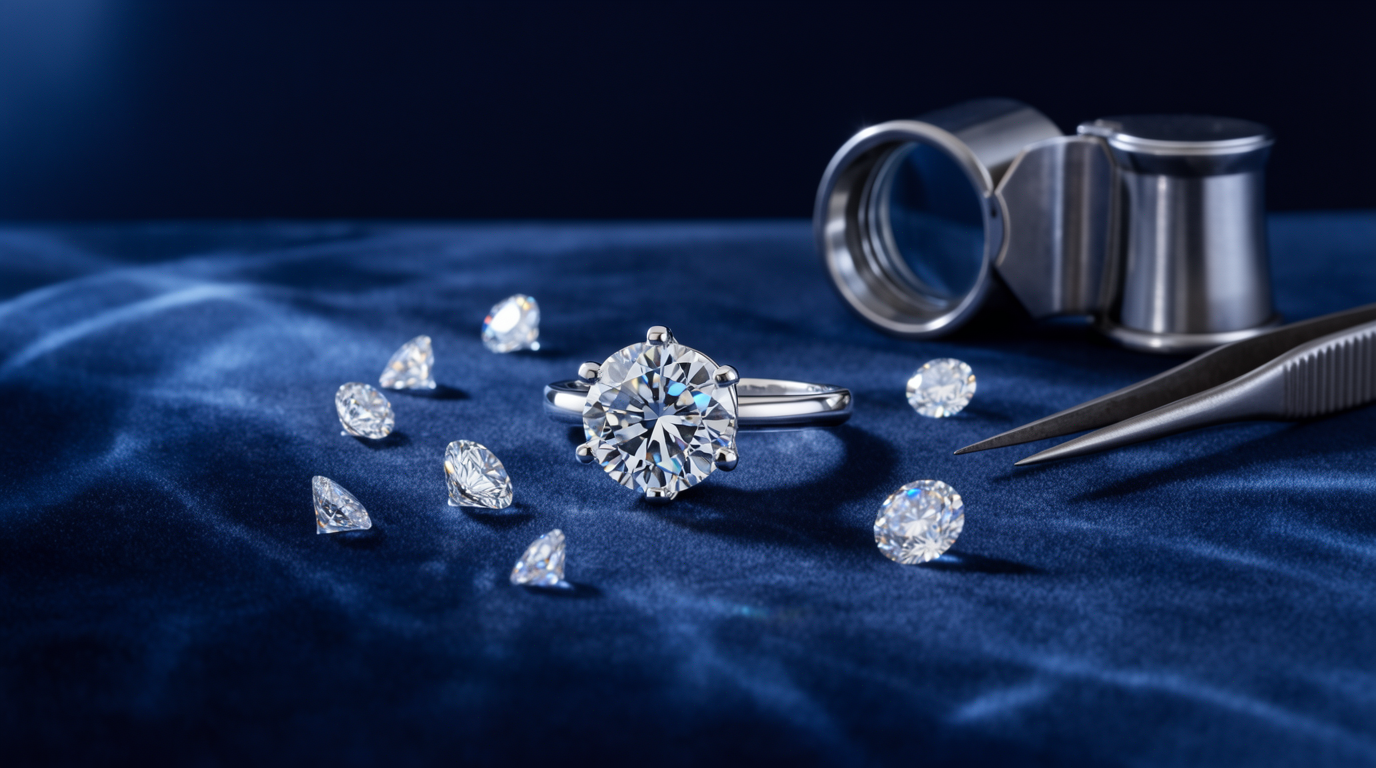
International markets: “retail” and “buy-back” are usually two separate systems
In many developed countries such as the United States, Canada, Japan, and much of Europe, most jewelry retailers focus on:
- selling new products;
- design;
- crafting;
- after-sales service.
They do not treat buy-back as a core business. Customers who want to resell are usually referred to:
- diamond dealers;
- gemstone trading businesses;
- auction houses;
- or the second-hand market.
As a result, resale prices usually reflect the current market value of the diamond or precious metal — not the original retail price.
This easily leaves consumers feeling they have “lost a great deal of value.” In practice, in most cases a consumer reselling jewelry can lose 50–70% of the original purchase price:
- with fashion jewelry or mainstream brands, a very steep drop is entirely possible;
- with a high-quality loose diamond that carries an international certificate and still matches market demand, the drop can be considerably smaller.
Vietnam is rather different
For many years, jewelry and gemstone businesses in Vietnam have built policies of:
- buying back;
- trading up to a larger stone;
- paying the difference;
- exchanging for a new product.
This is a distinctive feature of the Vietnamese market. The main reasons are:
- 1Building customer trustVietnamese buyers often ask: “What if I need to sell it later?”. A buy-back policy reassures customers when deciding to buy.
- 2Keeping customers for the long termFor example: buy 0.50 ct today, trade up to 0.70 ct after a few years, then 1.00 ct. The business keeps the customer throughout the upgrade journey.
- 3Recirculating inventoryBought-back diamonds — after inspection, re-polishing if needed, identity verification, and grading — can be sold again. It is a fairly efficient circular business model.
Is a loss of only 8–10% on buy-back real?
Based on the practical experience of many reputable businesses in Vietnam, yes — there have been, and still are, programs applying a deduction of around 8–10% or similar, especially for:
- diamonds in their original condition;
- with complete certification;
- purchased at that very retail system;
- meeting the conditions of the trade-in policy.
However, this cannot be taken as a market-wide standard, because the buy-back level also depends on:
- the actual quality of the stone;
- supply-and-demand fluctuations;
- the original selling brand;
- the condition of the certificate;
- whether the stone has been chipped, re-polished, or altered;
- each company's specific policy.
In other words, 8–10% is a commercial policy — a customer incentive offered by certain businesses — not the intrinsic value of the diamond.
Is this “investment”?
A clear distinction is needed. If a business promises “buy today, sell tomorrow and lose only 8–10%,” that does not mean the diamond has become an investment product. That small spread comes from:
- customer-care policy;
- customer-retention strategy;
- marketing;
- the business model,
and does not reflect any rise in the diamond's market value.
How should Vietnamese consumers see this?
A perspective worth considering
Drawing on nearly 30 years of appraisal practice, the SJC Chợ Lớn Assay Center has built its “Diamond Identity Verification (DIV)” process and emphasizes the role of independent verification. A new academic proposition:
In the Vietnamese market, the real-world value of a diamond depends not only on the 4C standard, but also on the “Guaranteed Liquidity Value” created by a business's trade-in policy and the ability to verify the diamond's identity (Diamond Identity Verification – DIV).
In other words, a diamond's value in Vietnam lies not only in the stone itself but in the ecosystem of services around it: the certificate, identity verification, the business's reputation, and its trade-in and upgrade policies. This is a fairly new approach — and it may explain why the same internationally certified diamond can deliver a different economic experience for consumers in Vietnam than in many other markets.
Frequently Asked Questions
- How much value is lost when reselling diamond jewelry in international markets?
- In many developed countries, retail and buy-back are separate systems, so resale prices reflect current market value rather than the original retail price. In most cases a reseller can lose 50–70% of the purchase price; high-quality certified loose diamonds lose considerably less.
- Why do Vietnamese businesses offer diamond buy-back policies?
- Three main reasons: building customer trust (answering “what if I need to sell later?”), keeping customers long-term through successive trade-ups to larger stones, and recirculating inventory — bought-back stones can be resold after inspection, identity verification, and grading.
- Is an 8–10% buy-back deduction the market standard?
- No. It is a commercial incentive offered by certain businesses, conditional on the stone being in original condition, fully certified, and bought at that very system. Actual buy-back levels also depend on stone quality, supply and demand, brand, and each company's policy — not the diamond's intrinsic value.
- What is “Guaranteed Liquidity Value”?
- It is the part of a diamond's real-world value created by a business's trade-in policy and the ability to verify the stone's identity (DIV) — alongside the 4C standard. In Vietnam, a diamond's value lies in the whole ecosystem of services around it, not just the stone itself.
Have a Diamond to Verify?
Look up a grading report with your Stone ID.